SurveyMonkey Rewards
- 4.2
- Rating
- 100.00K
- Installs
- Free
- Price

 Analysis by App-foxy
I approached SurveyMonkey Rewards as a small, practical lifestyle app rather than a serious income source. Its basic idea is easy to understand: you answer surveys and receive rewards in return. That simplicity is the main attraction, but it also sets the right expectations. This is best viewed as a way to turn spare minutes into occasional value, not as a replacement for paid work.
After using it, I found the experience most suitable for people who already keep their phone nearby during quiet moments. A short session while waiting for an appointment, sitting on public transport, or taking a break can feel worthwhile when a survey appears that matches your profile. The important word is “occasional,” though. Survey availability and the time required can vary, so patience matters more than speed.
How the everyday SurveyMonkey Rewards workflow feels
The normal routine is straightforward. I open the app, look for an available questionnaire, read the eligibility questions carefully, and answer consistently. Some surveys feel quick and focused, while others ask for more attention because they move through several related topics. The app’s store summary, “Take surveys, earn rewards!”, captures the central loop accurately without promising more than that.
You May Also Like

 Blood Strike: 2.5 Anniversary
Blood Strike’s Loadouts Turn Every Drop Into a Tactical Gamble
A close look at Blood Strike’s custom loadouts: how fast access to signature weapons reshapes its battle royale rhythm, rewards preparation, and narrows the gap between fights.

 Pandora - Music & Podcasts
Pandora’s Music Is Easy to Start, but Harder to Recover
Pandora’s strength is its low-effort path from a seed to a station. Its weak spot is how much confidence it asks you to place in connection, setup, and quiet recovery.

 8 Ball Pool
 Is Built on Rivalries, Rematches, and Routine
A close look at the rivalries, rematches, shared routines, and unanswered safety questions that turn a quick pool match into a persistent mobile community.

 Samsung Music
’s Quiet Strength Is Playing What You Already Own
Its reach comes less from spectacle than from dependable access to a personal library. That simplicity is both the app’s strongest retention engine and its ceiling.

 AccuWeather: Weather Radar
AccuWeather Review: A Quick, Clear Forecast for Everyday Decisions
For everyday plans, the best forecast is the one you can understand quickly. AccuWeather makes rain timing, radar, and local conditions easy to act on, with a few trade-offs.

 Hill Climb Racing
Why Hill Climb Racing Still Turns Crashes Into One More Run
A tiny car, a bumpy hill and one more upgrade: Hill Climb Racing keeps resurfacing because its simple chaos makes every near-miss feel personal.
More From Our News Desk



The first useful habit is to treat each survey as a separate time decision. Before starting, I consider whether I have enough uninterrupted time to finish it. Beginning a questionnaire while distracted is a poor strategy because rushing can lead to careless answers, and an interrupted session may be more frustrating than helpful. I prefer to start when I can concentrate for a few minutes.
Answering honestly is also important. Survey platforms depend on consistent responses, and trying to guess which answer might lead to more invitations usually makes the experience less reliable. I use the same basic details about myself each time and avoid changing an answer simply because a later question is phrased differently. That is a simple workflow improvement, but it makes the process feel much less random.
The app is free to download and use, which removes the biggest barrier for curious users. It is aimed at Everyone, so the interface and concept are accessible to a broad audience. Still, “free” does not mean effortless. You are exchanging attention and personal opinions for rewards, and that trade-off deserves more consideration than the bright simplicity of the interface might suggest.
One realistic scenario illustrates where it fits well. Imagine I have ten minutes before a meeting and want something more purposeful than scrolling through social media. I can check SurveyMonkey Rewards, see whether a suitable survey is available, and decide whether it is worth starting. If there is nothing appropriate, I close it and move on. That low-pressure approach works better than repeatedly opening the app expecting a guaranteed task.
What to check before settling into the routine
I would begin by making sure the app is running properly on the phone rather than assuming every device will behave identically. The minimum operating system is 10, so anyone using an older phone should check compatibility before planning around it. On a supported device, keeping the app updated is sensible; the current version is 3.08.05, and updates can matter for stability even when the core survey process remains familiar.
I also pay attention to the account and reward details shown inside the app before investing much time. The most useful question is not simply whether a survey is available, but whether the reward and the expected effort make sense together. A longer questionnaire may be reasonable when I have time, while a short break is better suited to something clearly brief.
Notifications deserve a deliberate decision. If I allow every alert, the app can become another source of interruptions. If I disable them completely, I may miss opportunities that are useful precisely because they arrive at a convenient moment. My preferred approach is to keep notifications only if I am actively using the service, then silence them when the app starts competing with more important parts of the day.
Privacy is another setting-related issue, even though it is not a button I would rush through. Surveys naturally involve personal opinions and profile information. I read the wording around each request and decide whether I am comfortable continuing. The reward should not pressure me into sharing something I would normally keep private. That is a personal boundary, but it is one every survey user should establish before building a habit.
Because SurveyMonkey is the developer behind the app, the name may feel familiar to people who have encountered its survey tools elsewhere. That does not change the practical review: the rewards experience should be judged by how clearly it presents available questionnaires, how easy it is to complete them, and whether the exchange of time for rewards feels fair to the individual user.
Small habits that make the process faster
Experienced use is less about finding a secret shortcut and more about removing avoidable friction. I keep my profile answers consistent, read eligibility questions instead of tapping automatically, and stop treating every invitation as mandatory. Those three habits prevent wasted time and make the app easier to fit around a normal schedule.
I also separate “checking” from “committing.” A quick check tells me whether anything useful is available. Starting a survey is a separate decision. This distinction matters because a survey can appear attractive at first and then become unsuitable once its questions reveal that it needs more time or concentration than I have available.
Another practical technique is to use a regular check-in window rather than opening the app constantly. I might look during a planned break, then leave it alone. This protects attention and avoids the feeling that I must monitor the app all day. For a rewards app, that is a meaningful improvement: the app should fit into my routine, not quietly become the routine.
When a questionnaire asks for an opinion, I answer from my actual experience instead of overthinking the “best” response. Survey questions can sometimes feel repetitive, and trying to analyze every option slows the process without improving the answer. Clear, consistent responses are more useful than hurried guesses or attempts to game the questionnaire.
I would keep a simple mental record of how much time I am willing to spend in a session. I do not need a complicated spreadsheet, but I do need a stopping point. If a survey begins to feel too long for the reward offered, I stop expecting it to become more enjoyable. The ability to walk away is one of the most useful skills with this type of app.
These habits also answer a common question: can someone use it casually without making it a daily commitment? Yes, and I think casual use is the better fit for most people. The app does not need to become a constant background activity. It works best when I check it with realistic expectations and accept that some sessions will produce nothing worth pursuing.
Where the experience has real limits
The biggest limitation is the unpredictable value of available surveys. A free app can be easy to try, but the reward depends on having a questionnaire that suits the user at the right time. That makes the service less dependable than a conventional part-time task platform. If I need a fixed amount of money by a fixed deadline, I would choose a more predictable option instead.
It is also not ideal for people who dislike answering personal or preference-based questions. The entire exchange depends on sharing opinions and background information, so anyone uncomfortable with that arrangement should skip it rather than use the app reluctantly. No reward is worth ignoring a clear privacy boundary.
Users who expect every survey to be short may also become frustrated. The app’s central promise is simple, but individual questionnaires can demand different levels of attention. I would not begin one while driving, walking through a busy area, or handling another important task. The phone should remain secondary to safety and real-world responsibilities.
Compared with cashback apps, SurveyMonkey Rewards is more directly based on answering questions rather than shopping. That can be an advantage if I do not want to buy anything to earn a benefit. On the other hand, cashback tools may feel more natural for people who already make regular purchases. Compared with microtask platforms, this app is narrower and easier to understand, but it may offer less control over exactly when work is available.
It also differs from ordinary opinion communities. A discussion forum may provide conversation, entertainment, or social feedback, while this app gives the interaction a reward-focused purpose. If I want to debate topics or follow a community, I would use a social platform. If I want a structured questionnaire during spare time, this is the more relevant choice.
The app’s public reception is encouraging without making it flawless: it holds a 4.3 average from around twelve thousand ratings, with roughly six thousand reviews. I read that as a sign that many people find the concept useful, not as proof that every user will have the same survey supply or reward experience. Personal fit remains more important than the headline score.
Who should use it, and who should pass
I would recommend it to patient users who enjoy giving opinions, have occasional idle time, and are comfortable treating rewards as a bonus. It is particularly suitable for someone who wants a simple activity with no purchase requirement and does not mind checking back later when the first visit does not offer a worthwhile questionnaire.
I would be more cautious recommending it to anyone seeking dependable income, instant payouts, or a guaranteed number of tasks. The survey model cannot promise the same predictability as scheduled work. It is also a poor match for people who find repeated questions irritating or who do not want to share the type of information that surveys commonly request.
The install base is over one hundred thousand, which suggests the app has reached a meaningful audience while still feeling more specialized than a mainstream social or shopping application. I would not choose it because of that figure alone. I would choose it because the basic exchange—time and opinions for rewards—matches what I want from a spare-minute app.
Age accessibility is another positive point. Since the content rating is Everyone, the app is presented as suitable for a broad audience, although individual users should still make their own decisions about privacy and the kinds of questions they are comfortable answering. A general age rating does not remove the need for sensible personal boundaries.
My verdict after using the routine
SurveyMonkey Rewards is a focused lifestyle app that succeeds when I keep its role small. The interface concept is easy to grasp, the price is free, and the survey-to-reward loop requires little preparation. I like that I can check it during an otherwise empty moment without committing to a complicated task system.
Its weaknesses are just as clear. Survey availability can make the experience inconsistent, and the value of a session depends on the relationship between questionnaire length, personal interest, and reward. It does not replace reliable work, and it should not be approached with the expectation of steady earnings. The app is most enjoyable when I am willing to close it and try again another time.
My strongest recommendation is to create a repeatable boundary: check at convenient times, read before committing, answer truthfully, and stop when the exchange no longer feels worthwhile. That approach avoids the two common mistakes—expecting too much and using the app too impulsively.
For me, SurveyMonkey Rewards earns a place as an occasional spare-time tool, not as a primary financial app. If you like surveys and want a free way to turn some idle minutes into rewards, it is worth trying. If you need certainty, privacy above all else, or a predictable hourly return, a different category of app will serve you better.
Overall, I would describe it as useful but situational. The best results come from experienced restraint rather than constant activity: choose the right moment, choose the right survey, and remember that the reward is a small bonus for your attention, not a promise of income.
FAQs for SurveyMonkey Rewards
01What is SurveyMonkey Rewards and how does it work?
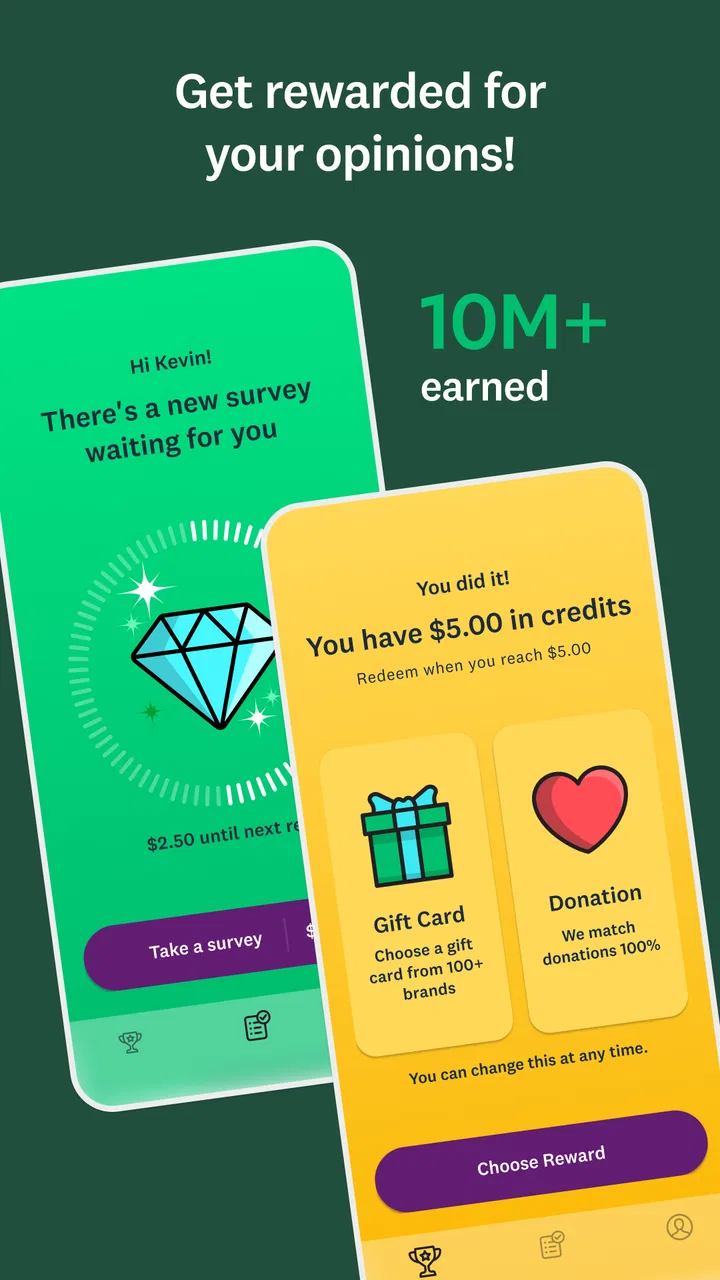
SurveyMonkey Rewards is a mobile app that allows users to earn rewards by participating in surveys. Users receive notifications when new surveys are available, and upon completion, they are awarded points. These points can be redeemed for gift cards or donated to charity. The app is designed for both Android and iOS devices, making it easily accessible.
02Is SurveyMonkey Rewards free to use and how do I sign up?
Yes, SurveyMonkey Rewards is completely free to download and use. To sign up, users need to download the app from the Google Play Store or Apple App Store and create an account. Once registered, users can start receiving surveys tailored to their profile, ensuring relevant and engaging content.
03How are rewards distributed and what can I redeem them for?
Rewards are distributed in the form of points, which users accumulate by completing surveys. These points can be redeemed for a variety of gift cards from popular retailers or can be donated to a charity of the user's choice. The app provides a list of available rewards within the user’s profile for easy access.
04Is my personal information safe with SurveyMonkey Rewards?
Yes, SurveyMonkey Rewards prioritizes user privacy and data security. The app follows stringent security protocols to ensure personal data is protected. Survey responses are anonymized, meaning that your individual responses are kept confidential and are not linked back to your personal information.
05What types of surveys can I expect and how often will I receive them?
Surveys on SurveyMonkey Rewards cover a wide range of topics including consumer products, services, and lifestyle habits. The frequency of surveys depends on the user's demographic profile and survey availability, but users can generally expect to receive several surveys each month. Notifications are sent when a new survey is ready, allowing users to participate at their convenience.
Pros
- Earn gift cards for completing surveys.
- Easy-to-use interface with clear navigation.
- Frequent survey availability for consistent rewards.
- Notifications for new surveys prevent missing opportunities.
- Redeem rewards with a low minimum threshold.
Cons
- Limited to users in certain regions.
- Surveys can be time-consuming for low rewards.
- Rewards are not available in cash form.
- Requires personal data to access surveys.
- App may occasionally have technical glitches.

SurveyMonkey Rewards
Gallery